Video on Web News

02 June 2006

Rap Video Site Sets Sights on Brand Advertisers

on ClickZ
by Kate Kaye, June 1, 2006


Grassroots street marketing has long been a primary method of choice for rap music marketers, but Rapvideo.com aims to take a different approach. It's delivering music labels and other advertisers customized interactive ad opportunities.

Just in time for Black Music Month, the youth-oriented destination launches officially today, offering ad-supported music videos from all corners of the rap realm -- from Reggaeton to Dirty South. It's also planning to let users show off their own video creations.

"The urban demographic is not really mentioned that much in terms of doing innovative advertising, and we're kind of hoping to change that a little bit," explained Rapvideo.com owner AJ Archibald.

In addition to pre-roll video ads and site display ads, the site is offering customized branded video player skins, like the one currently promoting Yo Gotti's new "Back 2 Da Basics" album through a partnership with Universal Music Group. The :05 to :10 Flash creations play before the music video streams, culminating by branding the video player itself. Currently, users can choose from a list of skin ads for Xbox 360 and Ludacris, or personalize their players with non-branded skins.

Site users, 80 percent of whom are expected to be between 18 and 34, according to Archibald, are given the option to distribute videos on their own sites, send videos to friends, and in some cases, link directly to iTunes and Amazon to purchase songs or CDs associated with the videos. In addition to the relationship with Universal, Rapvideo.com also gets video content from Warner Music Group and The EMI Group.

"One sponsor plans to provide a ring tone version of a song that can be ordered directly from a video player skin"
, Archibald told ClickZ News. Custom ads are produced by Rapvideo.com and all formats are sold on a CPM basis through the firm's ad sales rep, Blackrock Digital. The site uses Lightningcast to enable pre-roll video ads and sells remnant inventory through Tribal Fusion.

Though music label advertisers are the only ones that have purchased media directly from the site so far, the company aims to target other national advertisers in the auto, consumer electronics and beverage categories. "We'll approach brand advertisers that are a good fit for this market," commented Blackrock Digital President Chris Smith, adding that "the site's audience has a disposable income and they don't mind spending it."

While most online rap video selections from portals and music download sites are offered as part of a broad music and entertainment video selection, Rapvideo.com is relatively unique in its rap video-only offering. Blastro, a similar "urban entertainment" site offers Hip-hop in addition to pop and R&B videos accompanied by pre-roll video spots.

Over the past three months, Rapvideo.com has streamed anywhere from 25,000 to 100,000 streams each day. According to Archibald, adding a video by Christina Milian, whose MySpace page features her video in a Rapvideo.com player, helped boost daily unique visitors from 10,000 to 40,000. "The MySpace audience is already taking hold of this," noted Archibald. He said his firm can track which videos are being played and how often, but not to which sites they've been spread.

"That is an issue," he admitted; however, he doesn't think advertisers will be too concerned with potentially inappropriate content on affiliate sites displaying Rapvideo.com videos. "That's kind of the pot calling the kettle black," he commented, noting the risqué nature of many rap videos. Still, Blackrock's Smith expects that some ads will not run on affiliate sites. "At least with the larger brand advertisers we'll probably make sure they'll stay on Rapvideo.com and under our control," he predicted.

By this fall, the site will launch a CGM feature in conjunction with Interscope Records, allowing users to submit homemade videos created to accompany "New York Shit," a Busta Rhymes ditty. "They [Interscope] want users to create their own experience…their own regional vibe of what the song embodies," explained Archibald.


Read more!

Yahoo makes Web video search more like TV channels

on Reuters
by Eric Auchard, Jun 1, 2006


SAN FRANCISCO (Reuters) - Yahoo Inc. is making it easier for Web surfers to find videos by upgrading its search system to become more like saving favorite TV channels with a remote control, the company said on Wednesday.

The Internet media giant aims to recapture share in the fast-emerging market for viewing videos online -- the year's hottest Internet trend -- where Yahoo has lost ground over the past six months to upstart video search company YouTube.

"Instead of having to discover individual videos one by one, once you have found a source you like, you can keep coming back," Jason Zajac, general manager of social media at Yahoo, said in a phone interview.

YouTube, a San Mateo, California-based company with only 30 employees which was founded by two former developers at online payments company PayPal, surged from nowhere earlier this year and now attracts tens of millions of monthly users.

That is five times the U.S. audience of former market leader Yahoo Video Search, according to data from Internet measurement firm Hitwise. MySpace ranks second, Yahoo third and Microsoft Corp.'s MSN is fourth, data shows. Other rapid gainers are start-ups Grouper and Daily Motion.

Among the changes Yahoo is introducing to its video search service at video.yahoo.com is a simple way for users to subscribe to and watch "channels", or groups of videos related by videomaker, programmer or keyword topic.

Yahoo now allows subscribers to specific channels to tag, or categorize, videos to make it easier for viewers with similar tastes to find the video later. Users can browse for featured videos, popular videos or by category or "tag".

"It is really worthwhile to create something that people can go back to and not have to find all over again," said IDC analyst Josh Martin, who was briefed on Yahoo's plans. "Searching for video kind of sucks right now."

USER-GENERATED CONTENT

Taking advantage of the growing availability of broadband Internet connections, YouTube has made its name as the playground of quirky short-form videos contributed by users. It has yet to figure out how to make money off its service, through some form of advertising or other money-making effort.

To date, Yahoo had taken a cautious approach to serving up user-created video that is suddenly all the rage on the Web, focusing instead on acting as a showcase for professionally produced videos available across the Web or sports, news and entertainment programming licensed or created by Yahoo itself.

Zajac said Yahoo is applying an editorial process to its video search home page that balances high-quality programming against the popularity contest for the latest joke videos.

"Of course, users have access to all the content across the Yahoo network," Zajac said. "What we are adding to that is user-generated content."

The changes Yahoo is introducing to its video search service combine an uncluttered design look with linkages to its wider network of other Internet properties.

Videomakers both amateur and pro can now upload a video to Yahoo. Users can then post a version of their favorite videos onto their own Web sites using an embedded Yahoo video player.

"This is a good step for Yahoo," Martin said. The next move for the Sunnyvale, California-based company is to connect together video content across its network of sites ranging from news to travel to sports fantasy leagues. "Yahoo has stuff that others like Google or YouTube don't," he said.

Categories


Read more!

YouTube: Our humor, not our hack

on CNET News.com
by Greg Sandoval, June 2, 2006


Engineers at video upload site YouTube.com played a practical joke on fans late Thursday evening as they prepared to roll out new site features.

YouTube, which hosts homemade videos, took down the site and posted a cryptic and grammatically incorrect place-holder message written in capital letters: "All your video are belong to us."

The inability to get on to the site and the poor grammar had some YouTube fans believing that the site had been hacked. At around 10:45 p.m. PT, an additional sentence appeared that let confused users in on the hoax.

"No, we haven't be hacked. Get a sense of humor."

YouTube posted a note on the site at 7 p.m. PT warning users that it would be going down, said YouTube spokeswoman Julie Supan. The San Mateo, Calif.-based company has often placed humorous photographs or messages up when performing maintenance on the site.

"This is what the engineers do, they have fun with our users," Supan said. "They're all cracking up right now. You have to remember who are fan base is. They don't want some dry message."

Supan declined to reveal what site features are debuting Friday, but did say that they would not include a new advertising model. Industry insiders are waiting to see how the company presents ads to its audience of 12 million users.

The Internet's No. 1 video variety show, YouTube is facing growing competition from some big-time players. On Wednesday, Yahoo said it would launch a new video Web site in order to challenge YouTube.

Google and AOL have also jumped into the user-generated video market.

see also YouTube New Features: Post Videos to Your Blog and Channels


Read more!

Chinese Journalists Supported On Yahoo Video

on webpronew.com
by David A. Utter, 2006-06-01


The new video service from Yahoo now matches competitors YouTube and Google Video in permitting users to upload videos to the service for sharing with others; two videos that made it to the system may be a bit embarrassing to Yahoo.

The Good Morning Silicon Valley blog posted a brief note on a couple of people using Yahoo Video's recently released upload service. One video came from a lawyer for imprisoned Chinese journalist Shi Tao, brought to viewers in crystal clarity from ABC News.

Also, a video by the brother of imprisoned journalist Li Zhi, also from ABC News, appears in a Yahoo Video search for Yahoo China. The producers of both videos have helpfully provided translation via subtitles of both men's speeches, which we've excerpted as follows.

"Yahoo didn't only give information about Shi Tao, it has done the same to many others," said Shi Tao's lawyer. "Does Yahoo have to absolutely obey Chinese law? In fact, it has the right to decide. That's to say that if (Yahoo) finds there is a contradiction between the law and the protection of human rights, for example freedom of communication and expression, then Yahoo has the right not to comply."

"My brother is in jail because of you," said Li Zhi's brother. "His health wasn't great before he was imprisoned, he had hepatitis. Since he's been in jail, he's caught pleurisy because of doing hard labor."

"This has just torn our family apart. He's been found guilty under Chinese law, although when you look at his file, I'm convinced he's innocent. Your company is the reason all of this has happened."


Yahoo CEO Terry Semel came in for some criticism today when the Wall Street Journal's "D: Notebook" blog cited his remarks defending the company's actions in China. Much has been made of Semel's response to a question of whether Yahoo would have appeased Nazi Germany as it did China.

It's probably fairer to present Semel's comments as noted in the blog before the Nazi question, which we'll do here, and allow the reader to decide what he might mean:

"I continue to be pissed off, outraged, and feel very very bad about it," Mr. Semel said. "But you have to follow the laws of the country you're
in."

Mr. Semel went on: "I don't think any one company is going to change a country, and I dont think any one industry is going to change a country."

One attendee asked Mr. Semel if Yahoo would have cooperated with Nazi Germany the same way it has with China. His response: "Yahoo has a basic obligation not to have a point of view on basic content, and to present content … and aggregate things and to allow people to make their own choices. I don't know how I would have felt then." He added, "I don't feel good about what's happening in China today. I don't feel good about some of the things that happen in our own country."


Read more!

01 June 2006

New IFC Show to be Based on User-Generated Content

on [itvt] News Blog, May 30, 2006

The Independent Film Channel (IFC) will next month debut a show, called "Media Lab Uploaded," that will be centered on user-generated and user-selected content. The show draws on IFC's IFC Media Lab initiative, which provides a site where aspiring filmmakers can upload their films, to be watched and voted on by IFC viewers.

Since last month, IFC has been airing the top viewer-ranked films interstitially on its linear channel: "Media Lab Uploaded" will assemble those films into a monthly show, hosted by IFC News anchor, Matt Singer. IFC stresses that the films will not be censored or cut in any way. "Since the launch of Media Lab, it has very quickly become an online home to independent filmmakers from around the world, and the program continues to give these filmmakers a voice and a platform to showcase their work that might not otherwise get seen," Evan Fleischer, IFC's director of marketing and promotions, said in a prepared statement. "With 'Media Lab Uploaded' we are making a show out of user-created and -rated shorts, which caters to our tech-savvy audience and provides yet another venue to celebrate and empower the next generation of filmmakers. This show will not only highlight the top, viewer-ranked films, but also films we think shouldn't be missed."

Following the show's June premiere, a new episode of "Media Lab Uploaded" will air on the first Monday of every month. The show's host will provide an introduction explaining what the Media Lab is and describing the films to be featured in that episode. In addition to user-generated and selected content from the Media Lab, the show will offer various regular features, including "Featured Director" and "Singer's Favorites." The show will also explain to viewers how they can submit their films to the Media Lab.

According to IFC, Media Lab currently has nearly 12,000 registered members, who, between them, have submitted over 1,000 short films (films can be no longer than six minutes). The site has generated 400,000 film views since its launch late last year, the broadcaster says. Registered users can upload their films directly to the site, create a profile for their film, build a filmmaker home page, and view and rank one another's films. The Media Lab and "Media Lab Uploaded" are sponsored by Aquafina.

Categories


Read more!

Ultimate Fighting Championship Launches Broadband VOD Service

on [itvt] News Blog, May 30, 2006

Martial arts promoter, the Ultimate Fighting Championship (UFC), has launched a broadband VOD service, called UFC On Demand.

The service offers live streaming video of UFC events, a library of downloadable videos of those events, downloadable episodes of the Spike TV/UFC reality show, "The Ultimate Fighter," and video of preliminary-round fights that is not available for viewing anywhere else (customers have on-demand access to around 40 UFC fights at any one time). The service's content is offered both on a subscription and on a pay-per-view basis. Its digital storefront is powered by Entriq (note: the latter company also powers Channel 4's broadband VOD service), which is also providing all its backend tools, including technologies to protect against content piracy and fraudulent access. Content can be downloaded in either 700k or 1,500k file sizes. "As the fastest-growing sport America, the UFC is striving to satisfy the demand for state-of-the-art multimedia portals for our fans," UFC president, Dana White, said in a prepared statement. "With Entriq, UFC On Demand offers radical new content on either a subscription or pay-per-view basis. By partnering with a company that manages the entire content distribution process, we can focus on our sport and growing the UFC brand."

According to Entriq, the hosted solution with which it is providing the UFC includes a graphically rich digital store with search functionality; enhanced security features through additional fraud management and encryption layers on top of basic DRM; promotional capabilities, such as gift certificates and discount pricing models; and geo-targeting services that restrict access to content to select geographical locations. Entriq also says that its technology integrates cross-platform capabilities that will allow the UFC to expand its content distribution program to mobile and IPTV platforms, going forward.

Categories


Read more!

Flextech Taps Mobrio for User-Generated Content Platform

on [itvt] News Blog, May 30, 2006

Flextech, the content arm of UK cable operator, ntl/Telewest (it is the company behind such channels as LIVINGtv, UKTV, Trouble, Bravo UK, Ftn and Challenge), has tapped Mobrio, a company that specializes in online community services, to provide a interactive user-generated content platform, which will be integrated into Flextech's various channel Web sites and which will support shows broadcast on Flextech channels. According to Flextech, the platform can receive, format and present all user-generated content quickly and flexibly, regardless of the type and file format of that content--thus, the company says, it will allow viewers to use their mobile phones and PC's to upload audio and video clips, pictures and text.

Trouble is the first of Flextech's channels to incorporate the new platform, using it as the basis of a service called "Trouble Homegrown": "Mobrio's platform allows us to extend the program experience beyond the normal broadcast remit," Trouble Homegrown producer, Gavin Newman, said in a prepared statement. "We will be able to generate advanced activity around new and old shows alike that traditionally have been hard to creatively enhance due to rights rarely being extended to platforms beyond television. We will also use the new platform to maintain continuity between shows and series by building a sense of participation with viewers and encouraging them to have interaction with each other and the program producers. As well as being an entertaining viral platform in its own right, Homegrown will have very specific incentives: for example, auditioning for the new series of 'Bump n Grind' or the 30-minute weekly 'Homegrown' show which follows later this year, whereby people submit their video clips and the viewers vote for those they wish to see featured on-air."

When viewers submit their content to the Trouble Homegrown site, Mobrio's platform automatically creates an appropriate thumbnail link for the file, and then converts the file into a format that allows it to be automatically streamed to visitors. The creative design for this first deployment of the Mobrio platform was carried out by Holler Digital.


Read more!

ITV Interview: Mika Salmi, Founder and CEO, Atom Entertainment

on [itvt] News Blog, May 31, 2006

Multiplatform VOD and games company, Atom Entertainment (note:the company--which was founded in 2001 via the merger of AtomFilms and Shockwave.com--offers short films and animated titles on its AtomFilms.com broadband VOD portal and a range of games on its Shockwave.com portal; it claims that AtomFilms attracts a monthly audience of 5 million consumers), recently revamped its AddictingClips Web site to support uploads of user-generated content, including videos, animation and Flash-based games. Atom founder and CEO, Mika Salmi, recently spoke to [itvt]'s Tracy Swedlow about the company's strategy for user-generated content, about the emerging importance of user-generated and short-form video, about the company's future plans, and more.

[itvt]: You recently revamped your AddictingClips Web site to allow uploads of user-generated content…

Salmi: That's correct. Actually, AtomFilms has taken user-submitted content since we were founded. We just haven't always had an automated way to do it, and we've always filtered the content we've gotten. Over our history, we've taken less than 1% of what we've received--of course, we also proactively go and look for content, too. But AddictingClips is now basically another avenue for content to get to AtomFilms. We pick the best stuff from AddictingClips, and make it available on AtomFilms. In some ways, AddictingClips is like a farm system for AtomFilms. It also allows you to upload games--so it's also serving as a farm system for AddictingGames and Shockwave.com.
User-generated content is a great fit for AtomFilms. This is because it's not in a silo for us. A lot of these user-generated content Web sites are just standalone propositions, and they're still trying to figure out how to make money out of what they do. But our user-generated content Web site actually feeds our other Web sites--whether it be with content or traffic. And it could also work the other way around: our other sites could maybe feed traffic and advertisers to AddictingClips. So it's very synergistic with our other Web sites. In some ways, I would question the value of it, if it were just a standalone user-generated content site. But we've actually made it very much a part of our ecosystem of entertainment sites.

[itvt]: What's the business model for AddictingClips? It's advertising-supported, correct?

Salmi: Like I said, primarily it's a feeder. So advertising wasn't the main reason we created it, and we aren't necessarily banking on advertising to fund it. Having said that, though, advertisers really love user-generated content. But they can't figure out what to do with it. Advertisers seem to feel comfortable with AddictingClips, because of the way that we've positioned it--and also because of how we've placed the ads on there. So we're getting a lot of interest, and actually, we're going to start putting more and more ads up there. But we didn't start off thinking of it primarily as a way to generate more advertising. Nevertheless, as I said, it's actually been panning out quite well as an ad-supported site. It's producing quite a bit of revenue from advertising.

[itvt]: Content from AddictingClips has already been tapped by AtomFilms, correct?

Salmi: Yes. If you go to AddictingClips, you'll see that there's a box on the site promoting a program called "Cash for Clips." If you click on that box, you'll see a list of clips that have been chosen for AtomFilms: if you click on the links next to those clips, you can watch them on AtomFilms, and visitors to AtomFilms are now reviewing them. The makers of the clips that have been chosen for AtomFilms get $250 each: we're also making their clips available for the various distribution deals we've done; so we're probably doing to program some of them on Verizon's V CAST service and on the various VOD platforms where our content is available.

[itvt]: And the makers of those clips will only get a one-off payment of $250, however widely their clips are used?

Salmi: No. At AtomFilms, we always pay our content creators something upfront and then royalties on top of that. So, if we want to use a user-generated clip from AddictingClips on AtomFilms, we convert the content creator's AddictingClips upload license into an AtomFilms contract, and the content creator makes at least $250 and potentially more. So AddictingClips users whose clips are chosen become part of the AtomFilms system, as it were.

[itvt]: How do you determine how much money content creators get for their clips on AtomFilms?

Salmi: We like the idea of people marketing themselves, so with AtomFilms, the way we pay our royalties is by popularity. The more popular your clip is, the more money you stand to make. We put all of our advertising revenue into a pool, and the content creators share in that pool by popularity. So back when we had JibJab, which got something like 80 million plays over a few months, they got the bulk of that pool, because they were the most popular, by far. Normally, though, you can actually influence how much money you make by marketing your content on AtomFilms. If your content is being watched more, you will make more money.

[itvt]: How do you distribute that money?

Salmi: In quarterly checks. We tally up all the revenue we made in that quarter, put it into a pool, and share that revenue with the content creators according to their popularity.

[itvt]: Are you doing anything to make it easier for content creators to market their offerings?

Salmi: Yes. A lot of our filmmakers already market their own content, and we want to make it even easier for them to do so in the next version of AtomFilms. So, among other things, we'll be making it easier for them to send out links…there are lots of ways to do it.

[itvt]: Why did you decide to call your user-generated content site "AddictingClips" rather than by a name that was some kind of variation of the AtomFilms brand?

Salmi: Well, we bought a company called AddictingGames last fall. Addicting Games has about 8 or 9 million unique visitors a month. It's basically a directory of games, plus some hosted games. It's a Web site where there are a lot of people who happily link out to other Web sites, so it's just an incredible traffic engine. We thought that the way AddictingGames worked made it a better sister-brand to AddictingClips than to AtomFilms. As you probably know, you can post games, as well as films, on AddictingClips; and so we're also looking at AddictingClips as a feeder farm for games on AddictingGames. Also, the AtomFilms brand--as far as our advertisers and our distribution partners and Hollywood and everyone else is concerned--has a very high-level image. So we didn't necessarily want to associate that too closely with the kind of chaotic image that user-generated content has. However, we do obviously talk about AtomFilms on AddictingClips, so it's not as if we're shying away from associating them. But we simply thought that, as far as brands are concerned, AddictingClips was a better match with AddictingGames than with AtomFilms.

[itvt]: Now AddictingClips allows you to upload video directly from your mobile phone, correct?

Salmi: Yes. We've started doing more and more with mobile. As you probably know, we have a deal with Verizon's V CAST now, and we have other mobile deals in the works. So we wanted to position ourselves as a company that's on multiple screens. We thought that it was important to allow people to upload video from their mobile phones, because a lot of people are shooting video on their phones, now. We thought it would be advantageous for us to take the lead on that.

[itvt]
: Are you planning to offer a user-generated content service on V CAST?

Salmi: It depends on Verizon. They have a very controlled channel there--for AtomFilms and everything else. We've definitely had discussions with them and other phone companies about user-generated content elements. But right now, they prefer to have professionally produced channels.
However, we are definitely planning on putting some of the content we've accrued through AddictingClips' "Cash for Clips" program onto the AtomFilms channel on Verizon. So you will see some of those things making their way over there. But I don't think at this stage that you're going to see the full raft of thousands of clips that have been uploaded to AddictingClips appearing on V CAST or on another mobile phone service. However, I wouldn't doubt that it may happen at a later stage.

[itvt]: What were the challenges involved in allowing people to upload video from their mobile phones to AddictingClips?

Salmi: There definitely were some challenges in figuring out how to allow users to send videos. Because some mobile operators don't allow you to upload your videos, and there's also the question of how you can do it so that as many users as possible can have access to this functionality. However, once we cracked those problems and figured out some of the transcoding elements--because the format coming from a phone is very different than the format used on your PC--it was pretty easy after that. This is something that we expect other companies will figure out, too--it's not a proprietary, patented thing. We were just the first ones to figure it out and launch it.

[itvt]: Could you talk us through how the process works?

Salmi: The transcoding takes place on our Web site: you just send in raw video in whatever format your phone took it in; we receive it on AddictingClips; and then we have to transcode it into Flash. It's an automatic process. If you have an account with us and you want to upload movies, you're presented with an "Upload a mobile video" option, which gives you an email address to which you can send video from your phone. It's quite seamless: if you were to take a video right now of whatever room you're in, you'd simply put that email address in there and hit "Send." Within moments, it would be on our Web site.

[itvt]: Did you develop this capability in-house or was it provided by a vendor?

Salmi: It's kind of a hybrid. We developed all the specs and the features and a lot of the technical stuff having to do with email, but we used some outside consultants from a company called Reality Digital to help us put it all together.

[itvt]: You also provide people with the ability to embed video into their Web sites, correct?

Salmi: Yes. When your video has been uploaded, it gets its own page. You can see how many views it has gotten, and see the various comments that people have made. Also on that page is a box that says, "Embed on your Web page" It gives you the HTML code, and you just have to cut-and-paste that. You just highlight it, copy it and past it in. It will then embed that exact video onto your page. Then, when it's embedded, if you're good at HTML, you can actually choose what size you want it to be: small, big or huge.
Once it's on there, all you see is our video box. It's a very plain, white box. You see a little AddictingClips logo in the right-hand corner, but other than that, it's a very plain box and it's very simple. It actually looks really good on pages, because it's so simple.

[itvt]: Now, AddictingClips also allows users to get feedback on the content they upload, correct?

Salmi: Yes. Users can easily track the performance of their clips. If you click on a screenshot of a clip to watch it, underneath the video window it says how many views there were--so you can see in real time how many times it's been watched--and there's also a place for people to make comments about your clip.

[itvt]: How are consumers using the site's comments feature? Are communities forming around the site's content?

Salmi: Well, with the games, for example, people will say what their high score was. They like to compare high scores. Then, with the clips, they offer up comments like "Good job!" or "Is there any more of this?" So people often tend to have little conversations going on around the clips. Sometimes, if a clip is controversial, you'll see a back-and-forth conversation with five to 10 people talking about it.
Here's a good example of how community plays into the content we offer: we have an unusual game on AddictingClips, called "Don't Shoot the Puppy," which for a long time was a real conundrum for people. They simply could not figure out how to play the game. So people used our comments feature to talk about how to play it. Basically, it's a trick-game where, once you hit "Start," you don't touch anything: if you move your mouse or you touch your keyboard, it shoots the dog. And, of course, the game continually tries to lure you into touching something. People are going to love it or hate it, because it's kind of an evil-Zen game. But, for a long time, people couldn't figure it out, and when they did, they were all asking, "Where did this thing come from?" It generated a lot of discussion.

[itvt]: Are you seeing content uploaded to AddictingClips by international users?

Salmi: Yes. We've seen quite a few Japanese clips, and also a lot of content from Latin America. What's interesting is how, if you go to the site in the middle of the night--or some other time when people in the US are asleep, but when it's the middle of the day in some different time zone--you'll see all the different types of clips getting posted from the countries in that time zone.

[itvt]: What are your thoughts in general on the user-generated content phenomenon?

Salmi: I think user-generated content somewhat mirrors the reality- television craze. I think it is the ultimate reality TV--it's like personal reality television.

[itvt]: But you're getting all kinds of content--humorous clips, scripted amateur movies, and the like--that don't seem very similar to reality television…

Salmi: Yes. But reality television tends to be voyeuristic, and watching user-generated content--seeing what your fellow users can come up with--is voyeuristic in a sense.
I also think that the user-generated content phenomenon reflects the fact that people simply have a huge appetite for interesting video content--an appetite that's so huge, that the content doesn't have to be professionally produced. I think that a lot of people in Hollywood and in the major media companies are quite perplexed by this, and are asking themselves, "Does this mean that we shouldn't be spending so much money on production values?" They're trying to figure out how the phenomenon fits into the landscape of high production values and big budgets that they've carved out over the years. People definitely seem happy to watch less polished video content, provided it's interesting.

[itvt]: Are you seeing any interest from Hollywood in what you're doing?

Salmi: Yes, more than ever. What's interesting is that, when we first started, everyone in Hollywood and a lot of other people said, "What's the deal with all this short-form content? No-one wants to watch short-form content?" I think they had a pre-conception of short-form as being some kind of arty medium that wouldn't be appealing to a mass audience. We would respond that short-form could be anything from a music video to a short animation, but they just couldn't get their head around it.
But then, about six months ago, I heard Peter Chernin say--and I'm paraphrasing here--something along the lines of: "Consumers are jonesing for short-form content." Of course, I have to say that I thought it was quite funny that he used the word "jonesing." But I also thought, "Well that's great." Because what it meant was that short-form is finally no longer relegated to the dustbin, and is finally front-and-center. Everyone's talking about short-form.
Actually, the reason we're called Atom Entertainment is because atoms are small, but powerful. All the content we have is atom-like--even our games are short. Everything we have is in quick, bite-sized snacks. Of course, now that everyone has come around to doing what we've been doing all along, we're obviously in a much more competitive environment--whether the competition is News Corp. or the latest user-generated content site du jour.

[itvt]: Do you plan to give people content-creation tools on AddictingClips--editing tools, for example? Are you interested in being in the service business as well as in the content-hosting business?

Salmi: I'm definitely very interested to see how some of these online video-editing tools do--to see if they garner some interest. I think that simple editing online would be a great tool for people. If those kinds of tools prove successful, I think we could easily add that feature to AddictingClips. However, I don't see it as a be-all-and-end-all: more as a feature.
Actually, I do think we need to have a feature on AddictingClips that would provide users with tips on shooting and editing video. We've talked about it. We just haven't gotten around to putting it up yet.

[itvt]: The comments on AddictingClips don't appear to be moderated. Why is that?

Salmi: Well, according to the Digital Millennium Copyright Act, a site like ours has to be a passive conduit. We cannot be monitoring it or actively moderating it. We do have some filters set up, to stop people swearing. And if users tell us that they see something they don't like--whether it be a comment or a video--we'll take a look at it. But we take a hands-off approach in order to let the site just live its own life.

[itvt]: Can you talk about the new features you'll be rolling out on AddictingClips over the next six to 12 months?

Salmi: The reality is that we have a massive number of features in the works, and we have a lot of ideas. The question for us is, "What are we going to do first?" I think that's going to be the challenge for us. I can tell you that this site is going to be continually evolving. Six months from now, it won't look the way it does today.

[itvt]: The projects you're working on right now, are they more marketing-oriented or technology-oriented?

Salmi: Both. We're talking to partners. We're looking at technologies. We really want to build what we're doing across all our different brands: we don't think of our sites as standalone propositions, so it's very important for us to think about how AddictingClips, for example, fits in with Shockwave.com or AtomFilms.com or AddictingGames.com.


Read more!

iTunes to Sell NBC News Programming

on iMedia Connection
by Roger Park, May 30,2006


General Electric Co.'s NBC is teaming with Apple Computer Inc.'s iTunes service to sell news programming for $1.99 a download.

"We're leading a trend to put our work and our journalism everywhere our viewers and users want it to be," says Mark Lucasiewicz, NBC News vice president for digital media.

NBC plans to offer specially-created programs for the web that include interviews with John F. Kennedy and Martin Luther King.

It is speculated because of the $1.99 price that the downloads do not contain advertising.


read also: NBC Leads Networks Online

Categories


Read more!

CinemaNow Sells Disney Films Online

on iMedia Connection
by Roger Park, June 01,2006


The Walt Disney Co. has partnered with CinemaNow to sell films online.

The two companies plan to sell downloadable versions of titles the same day they are available on DVD. The movies will also be available for download on portable devices.

Prices are expected to be about $20 for new releases and $10 for older movies.

Disney's deal with CinemaNow is non-exclusive.


Read more!

Video Ads Prevent Bail-Out

on iMedia Connection
by Roger Park, June 01,2006


CNN Digital Research, the new media research branch of CNN.com, released a study that found video ads double ad awareness and brand image.
The study found that the majority of CNN.com viewers watch all or nearly all of the video ad when presented prior to a news clip. According to the study, 99 percent of viewers watched the entire:30 second ad for financial services, 87 percent for the telecommunications category and 86 percent for the luxury car category viewed the entire ad.

Greg D'Alba, COO of CNN ad sales and marketing, says "What this study proves is that the audience is not only there-- they're watching and they're engaged."


Read more!

Hong Kong Telecom Turns Phones Into TVs

on Advertising Age
by Normandy Madden, May 30, 2006


Leading Mobile Phone Operator Launches Live TV in One of the World's Most High-Tech Cities

HONG KONG (AdAge.com) -- Already home to the world's largest broadband TV platform, nearly universal mobile phone ownership and a blanket of Wi-Fi hot spots, Hong Kong has yet another reason to call itself one of the world's most high-tech cities.

Next killer app
The Chinese territory's leading mobile-phone operator, Hong Kong CSL, launched a 3G Mobile TV service it hopes will be the next killer app in turning mobile phones into miniature television sets.

3G stands for the third generation of mobile devices. First generation handsets provided basic cellphone services. The second generation added perks such as text messaging, or SMS.

The last wave of mobile phones, dubbed 2.5G, provided limited video capabilities, but 3G phones carry far more bandwidth for data. Their most impressive feature is the ability for real-time person-to-person video calling, but they also allow access to games, e-mail and real-time news, weather and entertainment video options.

CSL is offering customers of its high-end 1010 phone service live news, finance and entertainment around the clock. The technology was developed by Golden Dynamic and is powered by NMS Communications' mobile video technology.

Easy-to-use technology
Live mobile TV isn't entirely new. In Asia, South Korea and Japan have been experimenting with systems with mixed results, and there are less ambitious efforts underway in the U.S. CSL thinks its relatively easy-to-use technology and good content will makes the CSL service more successful.

The service launched 20 real-time channels, costing just less than 8 cents per minute, a price that is likely to drop over time. Content comes from Hong Kong's two terrestrial broadcasters, TVB and ATV, and its I-Cable system as well as foreign media companies like BBC World, Bloomberg Television and Fashion TV. A horse-racing channel is likely to be popular among Hong Kong's avid gamblers.

So far, the mobile TV service is not running advertisements, but it is gaining traction as a platform to promote movies and albums: "We have constantly received inquires from film traders and music publishers on collaboration opportunities after the exclusive launch of different mobile dramas," said Michelle Au, CSL's general manager, marketing communications and public relations, Hong Kong.

Ads star Hong Kong director
CSL, which introduced 3G and Wi-Fi services in 2004, is marketing the new mobile TV service with creative from Leo Burnett Worldwide featuring Andrew Lau Wai Keung. The well-known Hong Kong director of films such as "Infernal Affairs" went in front of the camera in a 30-second TV spot, accompanied by print and outdoor ads.

Launched this month, the ads compare 3G's innovation and ease-of-use with Mr. Lau's vision of life in the future -- simple, convenient and resonant, not the cold, complicated and disordered world of the future portrayed in most movies. The story ends with Mr. Lau and his son watching 3G Mobile TV on a beach.

"Seeing a need from our target [audience], who have a hectic lifestyle and get turned off with things that require hassle and effort, simplicity became 3G Mobile TV's core offering," said Barbara Yeh, group brand director at Leo Burnett, Hong Kong. "[Mr. Lau] shares the same vision of simplicity."


Read more!

'Telescoping' Ads Into Online Video Content

on Advertising Age
by Jeremy Allaire, May 31, 2006


Video Clips of Jeremy Allaire's Streaming Media East Remarks

Watch video podcast on AdAge! NEW YORK (AdAge.com) -- The TV-spot-like pre-roll commercials and adjacent banners that currently dominate online video advertising inventory are becoming "trivial," Jeremy Allaire told last week's Streaming Media East conference.

Speaking at the gathering at the Hilton New York, the founder and CEO of Brightcove said online video is rapidly moving into a "realm of very unique formats and sponsorship opportunities."

Interactive overlays
One of the most important of these, he said, is the use of video programming with commercial "overlays" that allow viewers with one click to pause the video programming and "telescope" into various sorts of interactive product-related messages. Later they can telescope out of the commercial activity and resume watching the video content.

"Play a game. Learn about a product. This overlay models allow you to have Internet interstitial ads that are not as intrusive as full video commercials," he said. "Telescoping allows you to have these fairly interactive immersive experiences that wipe over the entire surface of the broadband channel experience."

Online video streaming company
Brightcove is a Cambridge, Mass.-based company that provides online video streaming and related ad networking services to clients including AOL, the New York Times Co., Oxygen Network and SmartMoney.

Mr. Allaire was a co-developer of the ColdFusion e-commerce software system and a former chief technical officer of Macromedia Inc.


Categories


Read more!

31 May 2006

Pew: Nearly 50 MM Americans Create Web Content

on ClickZ
by Enid Burns, May 30, 2006


At home broadband users are more likely to create and post user-generated content on the Web, according to the "Home Broadband Adoption 2006," a report published by the Pew Internet & American Life Project.

Forty-eight million American adults have contributed some form of user-generated content on the Internet, it found. That's 35 percent of Internet users. Of those adults who have posted content on the Web, 73 percent, or 31 million, have a broadband connection at home.

"[The Web is] shifting now to user-generated content; it shows people engaging with the Internet in a number of different ways in their lives," said John Horrigan, associate director of research at Pew Internet & American Life Project. "It shows that people are pretty interested in using the technology to put something of themselves on the Internet, not just pull down information from the Internet."

Earlier studies on broadband conducted by Pew characterized the small contingent of content creators as the "broadband elite," but its new research shows the group has grown and diversified.

"Online content comes more often from younger people, but we do find that older people are sharing photos and videos," said Horrigan. "It's disseminated fairly evenly throughout the broadband population at this point."

The demographic makeup of content creators is less defined than in previous studies. Forty-six percent of respondents who live in households with incomes of less than $50,000 have put content on the Web. That compares to 41 percent of respondents in the over $50,000 demographic. Fifty-one percent of respondents under the age of 30 have posted some sort of content on the Web. Thirty-six percent of those over 30 with a high-speed connection have done some form of posting.

"There is an element of the Internet being the medium for creativity and the Internet being an outlet for creativity people bring to the Worldwide Web," according to the report. It considers blogging, Web site creation, contribution of work on Web pages or blogs and submissions of artwork, photos, stories or videos as user-generated online content.

Categories


Read more!

YouTube as the fifth network

on AdJab
by Chris Thilk, May 30th 2006


Engadget, the site whose mere heels we are not worthy to lick, has an interesting little experiment going on. They've been looking at video sharing site YouTube and comparing it against the television networks. In the first installment, they basically posited that YouTube needs to start inserting ads into its video streams. Such insertions would not only ease some coming financial hardships but sort of prove out the validity of the social video community model. This week they compare how such an ad would do compared against the networks in raw viewer number terms. While they allow that a six minute short video might of course have more viewers than a half-hour or hour network show, they break it down into "eyeball minutes" (a great term) and find that YouTube can seriously go head-to-head with the biggest prime-time shows in terms of ad revenue. If this doesn't wake some people up I don't know what will.


Read more!

Marketers Wary of Emerging Media

on AdWeek
by Brian Morrissey , May 26, 2006


NEW YORK While professing interest in new Web channels like social networks and video games, most marketers have no plans to use the venues in the next year.

Forrester Research, in a survey of 253 interactive marketers, found a reluctance to shift from more tried-and-true online channels like search and e-mail marketing.

While in-game advertising and advergaming has received much attention, 72 percent of marketers do not plan to use it in the next year. The story is the same for mobile marketing, which is used by 11 percent of respondents and 57 percent of whom say they do not plan to try it in the next year. Just 13 percent reported using blogs or social networks in marketing, and 49 percent said they had no plans to do so in the next year.

Shar VanBoskirk, a Forrester analyst, chalks up the reluctance to get involved in new Web opportunities to the already complex digital media landscape, where marketers are struggling to manage existing efforts. They are also finding tactics like search and e-mail to be effective and efficient, she said, while being constrained by limited resources to learn about emerging channels.

"There's curiosity but not a lot of activity," VanBoskirk said. "At this point, they're not ready or don't have the resources or haven't thought through how it works for their business."

While marketers expressed reluctance to try the newest forms of social media, they plan to beef up their spending on new targeting options for finding customers. Nearly three quarters said they either use or plan to try behavioral targeting in the next year. Similarly, 69 percent said the same for contextual targeting.

"The momentum, efforts and goals are shifting to the more data-driven marketing," VanBoskirk said.


Read more!

Virgin Mobile introduces ad-subsidized calls

on washingtonpost.com
by Reuters, May 30, 2006


NEW YORK (Reuters) - Virgin Mobile USA, a cell-phone service used mostly by teenagers and 20-somethings, said on Tuesday it was giving its customers the option to earn free calls if they view and respond to ads on their phones.

Wireless providers are putting more and more features such as Web browsers and video players in cell phones in an effort to expand their revenue beyond voice. They also hope to profit from using these advanced phones to display advertising.

Under the offer, customers of Virgin, a venture of Sprint Nextel (S.N) and Richard Branson's Virgin (VA.UL), can get up to 75 minutes of free calls per month if they spend an equal amount of time looking at ads and replying to these ads via text messages.

Virgin, one of the first providers to offer such a service, hopes the service will appeal to its often cash-strapped customers, 65 percent of whom are younger than 30 years old.

"Very practically speaking a lot of our customers are value conscious. They manage budgets that are finite," said Howard Handler, the company's chief marketing officer.

He said that while it was too soon to say how popular the service would be he expects it to increase revenue.

"It will contribute meaningful additional top line revenue and EBITDA," Handler said, referring to earnings before interest, tax, depreciation and amortization.

He declined to reveal details of the terms of Virgin's agreements with its first advertising partners Pepsi (PEP.N), Microsoft Corp.'s (MSFT.O) Xbox game console unit and truth, a youth smoking prevention campaign.

Forrester Research analyst Charles Golvin believes advertising will be "extremely important" to wireless providers as they deliver video and news to phones.

But he said it was not clear if many customers would want ad subsidized calls because cellphone calls are already cheap.

"If you give somebody the choice whether you can have free content with advertising or you can pay for the content they'll chose the former," Golvin said.

"Realistically the price of voice is pretty darn cheap on a mobile phone these days so giving somebody three free minutes of mobile voice is not a compelling proposition for most mobile users."

Labels:


Read more!

30 May 2006

Streaming Video on Mobile Phones

by Douglas Dixon, on Manifest Technology

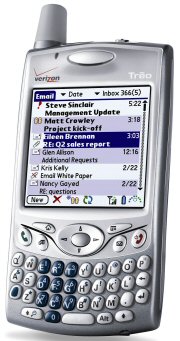
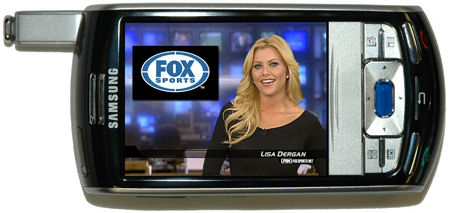
PalmOne Treo 650 - MobiTV, Samsung i730 - Media Player and SmartVideo

TV on your mobile phone? We're not just talking about video clips -- This is live TV broadcasts -- the big screen now fits in your pocket. Today's mobile phones have bulked up with PDA functions and processing power, added cameras for image and video processing, and then boosted transmission speed with 3G / EV-DO data service -- so Internet streaming video services can now flow directly to your phone.
Let's look at how this works on two contrasting platforms -- the Palm Treo 650 running the MobiTV live television service, and the Samsung SCH-i730 Pocket PC phone running the SmartVideo service. Both of these platforms were kindly provided by Verizon Wireless, and were tested with Verizon's data services.

Devices and Data Rates

The Samsung i730 supports Verizon's faster EV-DO (Evolution Data Optimized) data service, which receives data (including streaming video) at up to 10 times faster than the current 1xRTT service -- averaging 400 to 700 Kbps, and peaking up to 2 Mbps. The upload rate is slower (40 to 60 Kbps), comparable to 1X service at average speeds of 60 to 80 Kbps. Verizon currently charges $49.99 a month for unlimited data service, for either 1X or EV-DO.

Verizon also offers its V CAST service for playing video-on-demand clips, priced at $15 per month for unlimited clips. This runs on new EV-DO handsets using the Microsoft Windows Media Video format. Verizon does not target V CAST to PDA phone platforms, since, as we will see, these devices are open for installing and connecting to a wide variety of third-party services.

Palm Treo 650

The Palm Treo 650 is a nicely designed combination of a phone and PDA device, with more emphasis on a clean integrated experience, and less emphasis on functionality, connectivity, and media playback. It costs $399.99 though Verizon, and is available with or without a camera.

Just to try to clarify the corporate story, the original Palm, Inc. company split into two pieces: palmOne (with lowercase "p") is the hardware company, and PalmSource is the Palm OS software company. However, in mid-2005, palmOne bought back full rights for the "Palm" brand, and then PalmSource was acquired by ACCESS, a Japanese mobile software maker.

To further confuse matters, the Palm platform will no longer exclusively use the Palm OS -- in September 2005 came the announcement that Palm has licensed the Microsoft Windows Mobile operating system for Treo smartphones, to be available first from Verizon Wireless.

The Treo is about the same size as the i730, at 4.4 x 2.3 x 0.9 inches, and weighing 6.3 oz. It has a slightly smaller color touch-sensitive display (1.84 x 1.81), but with higher pixel resolution (320 x 320). This gives room for the keyboard below the display, instead of the slide-out design of the i730. Users of older Palms will notice the omission of a separate graffiti screen for pen text entry. Instead, the interface is designed to allow single-handed use for navigating and selecting functions with the navigator buttons, and two-thumb use for the backlit QWERTY keyboard.

The Treo is powered by a Intel PXA270 312 MHz processor, with 23 MB of user-available non-volatile memory, plus a SD expansion slot for SD, SDIO and MultiMediaCards. It provides multi-band cellular service, with CDMA or GSM/GPRS models -- but not 3G EV-DO service. Other connectivity options are beaming via infrared and Bluetooth, but not Wi-Fi.

The Treo also is available with or without an integrated camera. Eliminating the camera is important for business use, since you don't want to lose both your phone and your PDA when cameras are confiscated at corporate sites, court houses, or even sports events.

The Treo camera shoots at up to VGA resolution (640 x 480). You can shoot JPEG photos at 640 x 480 or 320 x 240, or capture MPEG-4 video clips at 320 x 240 or 176 x 144 resolution.

The Treo runs the Palm OS 5.4 operating system, with all the usual Palm PDA applications. For using the camera, there's a set of three integrated applications: Camera to shoot photos, Camcorder to shoot videos, and Media for organizing and viewing the resulting images. As with camera phones, you can share your images though multimedia messages or via the SD card, plus you can use the Palm functions to HotSync them to a host computer or send with an e-mail application.

The Treo also includes the RealPlayer application for playing audio clips, but not video. In addition, the built-in Palm media applications really are not designed for downloading and viewing your own files. You can download photos and display slide shows with third-party applications like SplashData SplashPhoto. And you can convert and download desktop video and audio clips with applications like TealPoint TealMovie, Kinoma Player for the Palm and Sony PSP, with native support for MPEG-4, AAC, and JPEG, and MMPlayer, with native playback of MPEG-1, MPEG-2, MPEG-4, and MP3 audio.

For online access, the Treo includes the Blazer Web browser. Blazer is pretty good at rendering arbitrary web pages, including images, either in compact or wide-screen modes. However, it also does not have built-in media playback functions. You can use Blazer to download media files in formats compatible with your supported applications, although it is limed to a maximum download size of 2 MB. Again, you can use third-party products to augment the built-in applications.

MobiTV - Service

Beyond playback of local clips, MobiTV from Idetic, Inc. offers live TV, delivered as steaming video to your handset. The MobiTV service is available on a wide variety of mobile phones, in the US through Sprint PCS, Cingular and several regional carriers; in the United Kingdom through Orange UK; and in Canadia through Rogers and Bell Canada.

To install MobiTV on the Treo, simply download the Treo application from Handmark, and sign up for a monthly subscription for $9.99.

The MobiTV service for the Treo includes 31 channels, mostly recognizable from your cable TV service.

The MobiTV channels include:

  • News: MSNBC, NBC, ABC, C-SPAN, CNBC business

  • Weather: The Weather Channel

  • Sports: ESPN, FOX, MLB.com, plus Vegas Sports and Vegas Scoreline

  • Lifestyle: Discovery Channel, TLC, Fashion TV, CNET technology

  • Entertainment: Comedy Time, California Music Channel, Country Music Channel

  • Kids: Discovery Kids, ToonWorld TV Classics


Depending on your carrier, MobiTV also offers additional channels, including international news and Spanish and French-language programming.

The Treo version of the MobiTV application provides a very clean and integrated TV-like experience. The video is framed by the MobiTV controls, with handy reception and battery indicators on the top, and channel and volume controls on the bottom. You can surf through the channels, or bring up the channel guide to jump directly to a specific channel (by number or logo -- there's no additional information on the current programming).

Once you select a channel, there's a delay as the video buffers up, typically under ten seconds. Then the video just plays continuously. In my testing commuting around New York City, playback was quite smooth, with occasional jittering to a shower frame rate (more visible with football action), and very limited stops to re-load the buffer. The video quality is typically quite watchable, with visible blockiness if you're looking for it, especially on underlit scenes or older video (like the cartoons). But when watching well-produced sports clips, you can see the lines on the football field and even read the text crawls at the bottom of the screen.

MobiTV - Technology

MobiTV uses two different approaches in order to be able to deliver video playback across a wide variety of mobile phone platforms. For multimedia-capable phones, it uses RTSP streaming of MPEG-4 video in a 3GPP wrapper, with AMR or QCELP audio. On a high-end platform like the Treo, MobiTV delivers video at around 320 x 320 resolution (slightly smaller because it is framed on the screen) at up to 80 Kbps, with AMR audio at around 8 Kbps.

For less capable phones, MobiTV uses a proprietary HTTP-like protocol to communicate between its servers and Java client, and deliver the required format, resolution, and data rate for the specific device. The original source video is first encoded in a master format at 640 x 480 resolution, using MPEG-4 video and PCM audio. Then, for delivery, the video is trancoded and stepped down to match the constraints of the target handset. At the low end, the result is Motion JPEG compression at 1 to 2 frames per second and a data rate of 12 to 15 Kbps.

In addition, the MobiTV server and clients can negotiate to dynamically adjust the delivery data rate to adapt to network traffic conditions. The service can switch between three rates per handset, adjusting every several seconds with each block of delivered video.

MobiTV also has introduced its MobiRadio service, with some 50 channels of commercial-free music streamed to your mobile phone, like satellite radio or radio on a cable TV service. With the great displays on mobile phones, MobiRadio can also display text information (station, genre) along with album art. For delivering this service, MobiTV is using a similar approach, using AAC at 16 Kbps as the primary delivery format on multimedia phones, and falling back to AMR and QCELP on lower-end devices. The service is currently mono, with stereo in the future.

For the next generation of video, MobiTV is working with H.264 video, which can deliver better-quality video (with less blocky or tearing artifacts), and at down to one quarter of the data rate. This video looks great at 400 Kbps, and even down to 100 Kbps on these small mobile phone displays.

However, decoding and playing H.264 video does require next-generation handsets, which typically also offer access to 3G EV-DO data rates. With the additional headroom with 3G bandwidth, H.264 video offers interesting alternatives to better balance quality and data rate. To improve the picture quality, add more bits per frame to enhance quality, and increase the frame rate (which also improves the quality by reducing the runs of more heavily compressed frames between key frames). And it's still possible to adjust and reduce the data rate to help the cellular carriers manage capacity.

Similarly, MobiTV is looking forward to stepping up to high-efficiency AAC audio as it becomes available in handsets.

Samsung i730 Pocket PC

The Samsung SCH-i730 is a Windows Mobile device combining a phone and Pocket PC PDA, with high-speed EV-DO data service. It features a large 2.8 inch, 240 x 320, color touch screen display, plus a slide-out QWERTY keyboard for thumb typing. It includes a Intel PXA272 processor, 64MB of built-in memory, a 86 MB SafeStore memory, plus a SDIO expansion slot. The i730 costs $599.99 though Verizon Wireless, without a camera.

This is a very open system, offering direct Internet access so you can surf the Web, download files, and play clips from anywhere online. Besides the cellular data service and Bluetooth support, the i730 also provides an 802.11b WiFi networking connection. With Windows Mobile 2003 Second Edition, you can surf the Web with Pocket Internet Explorer over EV-DO or WiFi, and simply click on media files in IE to launch and play them in Pocket Windows Media Player.

Microsoft provides the WindowsMedia.com Mobile video portal for mobile devices, which redirects to the video hosting service at windowsmediamobile.theplatform.com. The site has a rather limited selection of clips, especially compared to all the full-res content at WindowsMedia.com, with some recent mobile trailers, music and sports shorts, and some streaming talk radio.

Since these clips all just Windows Media Video 9 format being delivered from a Web server, you can browse and preview them from any desktop computer as well. The mobile clips are typically 37 or 56 Kbps (at 160 x 120 or 176 x132 resolution). However, the playback experience on the i730 can be problematical -- the playback experience is dependent on the site where the clips are hosted, so sometimes the clips do not launch or refuse to play.

SmartVideo

You also can watch video on the Windows Mobile platform by subscribing to the SmartVideo service, which streams live video and video on demand to Microsoft Media Smartphone devices over both the current cellular network and new 3G networks. SmartVideo also is adding support for the Treo 650.


SmartVideo video service playing on the Samsung i730


SmartVideo provides a free 7-day trial service. You can download the application directly and subscribe from your handheld. The Basic SmartVideo service for $12.95 includes news and finance from ABC, NBC, CNBC, and MSNBC; the Weather Channel; sports from FOX, College Sports TV, and Vegas Sports; and a variety of entertainment options from ABC, E!, iFILM, and Fun Little Movies. However, only CNBC and MSNBC are actually live TV services, as opposed to video on demand downloads of pre-edited clips.

SmartVideo also offers premium channels, including Rascals Comedy Classics for $3.95 a month, DIC Entertainment animations for $4.95, and "mature" options for Girls Gone Wild ($4.95) and Naked News ($6.95). SmartVideo is also adding new channels including Spanish, family, and religious programming.

To access the SmartVideo service on the i730, first launch the SmartVideo application (to track your subscription), which than launches Internet Explorer to display the SmartVideo portal and browse the available channels. When you click (tap) to select a video, IE launches Media Player to stream and display the actual clip. To minimize load time, the SmartVideo channel Web pages are rather terse, with just the text names of the channels and a small thumbnail image, but no descriptive text.

As a result, channel surfing can be a somewhat clunky process, even using the faster EV-DO service -- with 5 to 10 second round-trip delays in IE to browse the hierarchical list of channels on the SmartVideo website, and then around 10 seconds to fire up Media Player, connect to the actual video clip, and then buffer it for playback. Even with a subscription service, I found that sometimes the channel hierarchy had empty pages, or selected clip just did not play.

Obviously, SmartVideo also uses the Microsoft Windows Media format, with typical clips compressed using Windows Media Video 8 compression at 41 kbps.

Futures

So this is the future -- streaming music and live TV available anywhere, playing on your mobile device. You don't need to find a WiFi hot spot, with 3G cellular services like EV-DO these services can stream at 400 to 700 Kbps. But will this model scale up, as a cellular network designed for short voice calls feels the strain of millions and then billions of cell phone users start watching live TV?

Yes, video playback tends to be short form, with people watching brief clips or updates during downtimes like waiting for a train of airplane. However, it does peak during major news events, from celebrity trials to national disasters. And audio service can be continuous as people listen to music in the background, but at least it runs at a significantly lower data rate.

One answer may be coming from bringing the old-fashioned idea of broadcast TV transmission to mobile devices. Even as over-the-air television is being replaced by cable and satellite, the mobile industry is looking to add it to cellular devices as yet another transmission band. Technology from DVB-H (Digital Video Broadcasting-Handheld) and QUALCOMM MediaFLO is starting to be deployed in trials to broadcast some 10 to 20 digital channels to compatible handsets.

So how might video services be delivered? For example, MobiTV is positioning its service as a universal front-end program guide that offers a single integrated TV service that could be delivered over all three possible legs of transport mechanisms to the handset. Each feed then could be transmitted using the most efficient channel to balance the load for the carrier, in a way that is transparent to the user. Video on demand and niche broadcast material could be delivered as a standard unicast data service, as it already is today. The popular broadcast material could be routed more efficiently though new cellular multicast equipment that is being developed within the industry. And a handful of the most popular broadcasts could be transmitted out-of-band in alternative spectrum through services like DVB-H.

In this way, the cellular carriers have a path for managing bandwidth usage into the future, even as these services become more popular.

Categories

Labels:


Read more!

Turner Media Group: Interactive TV Converts Ads into Sales

on MediaBuyerPlanner, May 28, 2006

After some false starts, it seems that interactive advertising is gaining a foothold, as Denver-based Turner Media Group, both an ad agency and a provider of eight interactive TV channels, has created interactive TV spots for clients like Ford, the U.S. Navy, Lexus and home-security provider ADT, writes Colorado-based Rocky Mountain News.

On all eight of Turner's interactive TV channels - which mesh product placements and original programming - viewers can use their remote to find out more about featured products, sometimes converting ads directly into sales.

Turner's interactive adds for Ford's 2007 Explorer ad campaign that launched earlier this year included one spot during the Ford-sponsored Ironman triathlon that invited subscribers of EchoStar's Dish Network to push a bottom on their screen to learn more about the SUV. "An educated consumer is in a better position, mentally, to make a purchase," said Gary Turner, founder and chief executive of Turner Media.

Categories

Labels:


Read more!

ABCNews.com Adds Ad-Supported BBC Videos

on VOX, May 26, 2006

ABCNews.com users can now access ad-supported BBC-produced video content, an addition stemming from an exclusive agreement the two signed earlier this year, writes MediaWeek (via MediaBuyerPlanner). ABCNews.com will offer 1-2 minute clips from BBC that feature international news, business, health, entertainment and technology news and reports.

"We continue to see an increasing number of people watching ABC News video online, and we believe expanding this offering, in depth and variety, only helps to propel our growth on the web," said ABCNews.com executive producer Michael Clemente.

The new video offering comes as part of the agreement that ABC News signed in January with the BBC to exclusively distribute in the U.S. its content on several digital platforms like video on demand and wireless.

Categories

Labels:


Read more!

Video-Site Traffic Soars, YouTube Rules

on VOX, May 26, 2006

Visits to the top 10 online video sites has increased 164 percent in the past three months (from week ended February 25 to week ended May 20), with YouTube alone accounting for 43 percent of that traffic, according to Hitwise. The online video site was also ranked at number 42 among the half a million websites tracked by Hitwise. YouTube's share of visits has increased 160 percent in the last three months.


YouTube, both a video and social-networking site, allows users to create their own profiles, post videos and comment on each other's posts. Social networking giant MySpace provided more than 20 percent of YouTube's traffic in February and March, before MySpace widely launched its own video sharing service by placing a "videos" link on every profile page on March 31.


YouTube's average session time for the week ended May 20 was 13 minutes 20 seconds, three times that of MySpace Video (4 minutes 41 seconds).

"The rapid growth of online video sites in the past six months demonstrates a major shift in online behavior"said LeeAnn Prescott, senior research analyst at Hitwise. "The internet is quickly moving from static web pages to an environment rich with interaction and user-generated multimedia content."

Labels:


Read more!

Trading Banners For Sight, Sound And Motion

on MediaPost Publications
by Dave Morgan (CEO of Tacoda), May 26, 2006


Tacoda ONLINE ADVERTISING IS HOT. SO hot in fact, that pundits lately have increased projections for the potential size of the online ad market, some now predicting that U.S. online ad expenditures could hit $35-50 billion by the end of this decade, up from $12.5 billion last year, according to IAB/PWC. How could that be? Is it even possible? Even if advertisers wanted to spend that much money online, where could they put it? Is there likely to be enough quality inventory for all of those ads? This has been a topic of debate ever since the online ad market began its resurgence two year ago.

While the demand for online advertising is growing fast, the supply of quality online ad inventory has been lagging. The key word here is "quality." Online ad spend is growing at more than 30 percent per year, but most Web sites have audience and page view growth rates that are closer to 10 percent to 20 percent per year. The latter is not keeping pace with the former. Since much of the online ad growth is from traditional brand advertisers, the explosion of new inventory from social networks, where the content is riskier, has not helped much. The shortage of enough high quality and easily accessible inventory is already starting to drive up pricing, which undercuts some of the economic advantages of online versus offline mass media. Tight inventory and higher prices are forcing advertisers to make buys on more sites and on smaller sites, which makes both their buys and their lives much more complex and much less satisfying.

So, while it may be easy to predict that the demand for online advertising could take on television-like scale in a few years, pragmatism tells us that it is just not possible. Pragmatism tells us that it will take many more years for online media to create the maturity and scale and buying simplicity necessary to easily absorb that kind of demand.

Is that our future? Are we destined to live in a supply-constrained marketplace?

While normally quite persuaded by pragmatic arguments, I am not convinced here. As challenging as it may be for the online ad market to absorb tens of billions of dollars in new expenditures each year, I am confident that it can and will. How? It's simple. Video.

The emergence of web-based video advertising, and the "sight, sound and motion" that it brings will give the online ad market the scale that it needs.

Am I drinking too much of the broadband Kool-Aid? Maybe, but consider my reasons.

  • Built-in Buyers.Video advertising is easier for traditional advertisers to buy. There are lots of them, and they already know and love video advertising. They buy billions of dollars of it on television every year. With Web video, they can finally find something about the Internet that they understand and feel comfortable with. And, given the challenges that the television folks are having in keeping their audiences, online offers just the balance they need.

  • Self-Evident Value. Ad agencies and their clients already know that sight, sound and motion can drive powerful branding. They don't need a pre- and post-campaign branding study to know that it works. The ability for video advertising to brand is self-evident to them.

  • More Yield.Video advertising has more impact and commands much higher pricing per unit, per page, and per person than more traditional online banners or simpler rich media. This means more money for less inventory. Imagine a world where most ad-supported Web sites have dumped their three of four banners in favor of one major video unit. This alone could dramatically extend the top-end scalability of the medium. Changing over to better units with higher CPMs means lots of revenue growth on the existing audience, and doesn't require more traffic growth.

  • IPTV. Internet Protocol Television (IPTV) is coming fast. Cable systems all across the country are upgrading to digital and all of the suppliers are pushing Internet-enabling. Cisco now owns Scientific Atlanta, the country's largest supplier of TV set-top boxes, and Lynksis, the country's largest supplier of WI-Fi devices in the home. The new TiVo is networked, as are Xbox and all of the new video game consoles. With all of that hardware moving into U.S. homes by the tens of millions, we can be certain that IP-enabled television will hit critical mass in the U.S. faster than most people think.

The online ad industry can scale this market, and video will be a big part of it. It can absorb more spend. Sight, sound and motion can engage consumers better than static or basic rich media banners can. This will justify much higher pricing than we see today. It is already a staple on the home page of NYTimes.com. The rest of the next can't be far behind.

Categories

Labels:


Read more!

 
FREE hit counter and Internet traffic statistics from freestats.com